New seafood label law posted in U.S. Congress
Earlier this month, after the fall out taking place after conservation group Oceana’s latest seafood…
 Earlier this month, after the fall out taking place after conservation group Oceana’s latest seafood mislabeling report, Representative Ed Markey (D-Massachusetts) and five other Representatives introduced a bill in Congress to protect consumers, fishermen, and the public’s right to know (what they’re eating).
According to the Oceana report, one third of all seafood samples from across the nation were mislabeled. A government report from 2009 estimates that only 2% of seafood imported into the U.S. is inspected and only 0.001% is inspected for fraud. Rep. Markey, whose bill is available as a PDF here, takes issue with these data.
“Fish fraud is a national problem that needs a national solution. This bill finally tells the seafood swindlers and fish fraudsters that we will protect America’s fishermen and consumers from Massachusetts to Alaska”… “From tackle to table, this bill makes the entire seafood supply chain more transparent and trustworthy.” – Rep. Markey Press Release (3/6/13)
Originally introduced to Congress as the SAFE Seafood Act, this new iteration of the bill, the Safety and Fraud Enforcement for Seafood Act of 2013 (H.R. 1012) aims to close the door on fraudulent practices “that cheat fishermen and consumers, while posing health risks to pregnant mothers and others” (see, Press Statement).
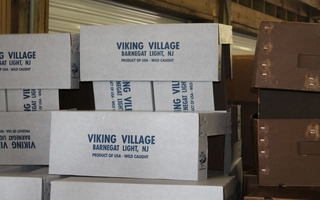
Viking Village – Barnegat Light, NJ; Wild-Caught, Product of the USA (Photo: S. Dixon).
Specifically, the SAFE Seafood bill is broken down into a few main themes:
1. Cooperation. The bill mandates that federal agencies cooperate more on seafood inspections, and urges that those inspections focus on fraudulent labels as often as health standards. Also, the number of inspectors could rise, as the bill provides for more federal, state, and local authorities.
2. Transparency. Fishermen collect a ton of data (e.g., gear type used, location fish was caught, species, etc.) that should stay with the fish – from processing to final sale. This bill would require that transparency, for fish caught in the U.S. or abroad.
3. Lists. Who doesn’t like lists? This bill would require a list (to be posted online) of anyone – in the U.S. or abroad – who violates the bill; an expanded list of standardized fish names; and a list of market names for those fish. Education is key – lists of the bad actors of seafood fraud should help solve part of the problem.
This new label law seems aimed at the border – making sure that what comes in to the country is what is says it is (and perhaps is from where it says it’s from), likely helping commercial fishermen in the U.S. who already have transparent, cooperative, and clear operations. Overall, there is a long way to go for fighting fish fraud – and protecting the fishing economy and public health – and this labeling law seems to be a good first step: more international inspection, more public education, and more uniformity among wholesalers.