Formulating Healthier Foods Using Pulse Ingredients
Tanya Der, manager of Food Innovation & Marketing at Pulse Canada, provided an overview of the m…
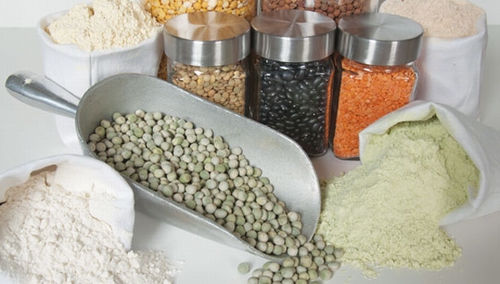
Tanya Der, manager of Food Innovation & Marketing at Pulse Canada, provided an overview of the many uses of legumes (pulses) at Prepared Foods’ R&D Seminars-Chicago in her seminar titled, “Opportunities for Formulating Healthier Foods Using Pulse Ingredients.” She noted that Canada is a major producer and exporter of pulses globally, with production increasing over 500% between 1990-2010.
Pulses are a very high source of dietary fiber (14-25% dry weight) and are a quality protein source at about 20-30% dry weight. Pulses are high in lysine and low in methionine and cysteine, while cereal grains are typically low in lysine but high in methionine and cysteine. The complementary effect of the amino acids makes these protein sources a complete protein. As an example, combining yellow peas with a PDCAAS of 0.64 and wheat flour at 0.43 can, at a 30:70 ratio, result in an elevated PDCAAS of 0.75.
Clinical studies demonstrate favorable effects of pulses on several parameters related to cardiovascular disease. Regular consumption of pulses can reduce blood levels of total cholesterol and low-density lipoprotein cholesterol, two major risk factors for cardiovascular disease. The range of beneficial nutrients in pulses includes total and soluble fiber, folate, and antioxidants (tannins, flavonoids) and other phytochemicals—all of which may contribute to lowering the risk for cardiovascular diseases.
For diabetic control, pulses possess a low glycemic index (GI), with resistant and slowly digestible starches contributing to glucose management. Further, pulses contribute satiety to the diet, and an inverse relationship between consumption and the risk for obesity has been reported.
Increased innovation in the use of pulses in food products has resulted in the development of new formulations geared towards improving nutritional profiles. As an example, Der reported that processing of pasta containing chickpea flour at a 30% inclusion results in a product of optimal flavor and texture attributes.
In addition, the protein quality of wheat pastas (100% durum wheat) is improved with the addition of 25% lentil flour. Overall protein quality increased 25% from 11.7 to 14.7 and PDCAAS from 0.43 to 0.71—thus allowing a “good source of protein” label claim and a 100% increase in fiber content.
Health benefits of pulse ingredients are also being tested when processed into commercial food products. Studies of noodles formulated with coarsely and finely ground pulse flours (navy bean, yellow pea, green lentil) conducted by Glycemic Index Laboratories (2011) found that all pulse flour noodles maintained a low GI compared to white bread.
Research has shown that pulses can also be used effectively as a binder in meat. Adding up to 12% lentil flour in beef burgers increased cook yield. Heat treatment of lentil binder reduced burger off-flavor. Pulses can be used in such applications to reduce formulation cost; increase sensory quality; and reduce fat content by 50%, offering the potential to increase shelf-stability and achieve gluten-free status.
Pea fractions have been tested as 100% replacement of corn starch and wheat flour in coated meat products, including chicken and fish nuggets, and chicken breast. Use of pea fractions led to increased cook-yield and batter pick-up; lower oil absorption; crispier and more golden color; improved freeze-thaw stress; and improved retention of quality during extended period under heat lamps.
Pulse ingredients tested in yogurt production at 1-3% as a carbohydrate source were reported by Der and resulted in increased acidification rates during fermentation, and produced a product with decreased syneresis, while not affecting pH level. Further, the viability and stability of L. rhamnosus was comparable to or higher than control after 0 and 28 days storage.
Pulses and their fractions are gaining in popularity, as they offer a “clean” label; are non-GMO and gluten-free; and have low allergenicity. The range of new formulations support Der’s conclusion that “pulses (can be) great on your plate.”