Italian research continues to obtain basic knowledge on PSA
Soon after the genome sequencing, the pathogen origin, the set up of rapid detection techniques, the…Soon after the genome sequencing, the pathogen origin, the set up of rapid detection techniques, the definition of the cycle of disease, the field trials on the effectiveness of compounds in reducing the spread of the bacterium, Italian research has obtained other basic information on PSA (Pseudomonas syringae pv actinidiae).
Following a collaboration between the Consiglio per la Ricerca e la Sperimentazione in Agricoltura (C.R.A.) -Unità di ricerca per la Frutticoltura di Caserta (Milena Petriccione, Ilaria Di Cecco, Marco Scortichini) and the Consiglio Nazionale delle Ricerche (C.N.R.) - ISPAAM, Napoli (Simona Arena, Andrea Scaloni),an important study has been recently published in the outstanding Journal of Proteomics, which starts to elucidate the relationships between the pathogen and the host plant through the identification of proteins involved in the pathogenicity mechanisms and induced by PSA, 10 days after the systemic infection.
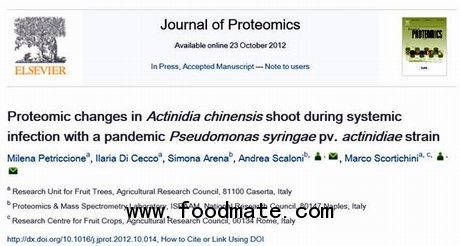
Instead of investigating model plants, the original approach takes into consideration directly the host plant (Actinidia chinensis) and the pandemic PSA strain currently causing worldwide severe economic losses to kiwifruit cultivation.
Among the proteins identified, there are those involved in the basic defence mechanisms, those related to the ROS system, some "heat shock" proteins and one protein of the bacterium membrane that could proove very useful for improving the rapid, early detection of the pathogen in the propagative material and orchards.
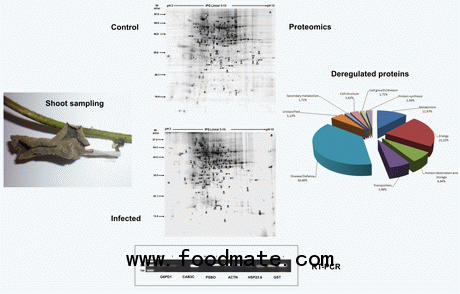
After the systemic infection, a general reprogramming of twig metabolism has been observed that promotes a relevant induction of proteins involved in carbohydrate and photosynthetic pathways. So, a rapid plant organ-specific response has been pointed out soon after the systemic invasion by the pathogen.