France tops EU DNA tests for horsemeat in beef
Announcing the results on Tuesday, the European Commission said that for the EU as a whole, just les…
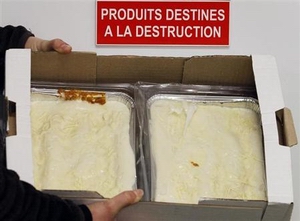 Announcing the results on Tuesday, the European Commission said that for the EU as a whole, just less than 5 percent of all beef products tested had come back positive for horse DNA.
But the figures showed that of 353 tests carried out in France, 47 tested positive for horse DNA, giving a rate of more than 13 percent.
"In terms of image it's not good. It risks delaying our attempt to regain consumer confidence to get out of the crisis, because it is not over yet," Jean-Rene Buisson, chairman of the French food industry group ANIA, told Reuters.
Buisson said it would be important to know how much horsemeat was detected in each positive sample, as tiny traces could be the result of accidental contamination at processing plants rather than deliberate substitution. The Commission did not provide that information.
Europe's horsemeat scandal has damaged confidence in parts of the continent's food industry, hitting sales of processed ready-meals and boosting demand for organic produce.
The program of EU-funded DNA tests was approved by member governments in February in a bid to gauge the extent of the problem and restore consumer confidence in the bloc's food safety controls.
The results revealed a mixed picture across the EU. Greece had the second-highest level of positive results with 288 tests yielding 36 positive results, a rate of 12.5 percent. About 1 in every 10 tests also returned positive in Latvia, Denmark and Estonia.
By contrast, Germany found horse DNA in just 3.3 percent of samples, and in the Netherlands the rate was less than 1 percent.
Both Ireland - where the discovery in January of horse DNA in a burger labeled as pure beef first sparked the scandal - and Britain - where retailers including Tesco have been forced to withdraw products found to contain horse - returned no positive results for horsemeat.
HEALTH RISK?
Britain, however, had 14 positive tests for the potentially harmful veterinary drug phenylbutazone - known as bute - as part of a second set of EU-wide tests on horsemeat destined for human consumption.
The only other countries to find bute in horsemeat were Ireland and the Czech Republic, each recording a single positive result.
"The bute is now really concentrated in the UK, but mainly because the UK has tested every horse slaughtered since February, so they have done a huge number of tests - more than 800," said a senior EU source who spoke on condition of anonymity.
For the EU as a whole, about 0.6 percent of slaughtered horses tested positive for bute, the results showed.
EU food safety experts said on Monday that the level of bute residues found in horsemeat was unlikely to pose a health risk.
"The opinion ... is encouraging. It shows that it isn't worrying as such. You'd have to eat hundreds of horsemeat steaks for months before you encountered any problems with phenylbutazone," EU health spokesman Frederic Vincent told a news briefing on Tuesday.
Criminal investigations are under way in several EU countries to try to identify those responsible for passing off illegally labeled horsemeat as beef.
Last week, authorities in the Netherlands said about 50 million kilos of beef distributed by two Dutch wholesalers over a period of two years may have contained horsemeat, fuelling suspicions that the country could be one of the possible origins of the scandal.
"It's probably true that the Netherlands is the source of some of the fraud," the senior EU source said.