Truvia meets sustainability goals early
The Truvia business has announced that it has met its 2015 sustainability goals ahead of time. In 2…The Truvia b
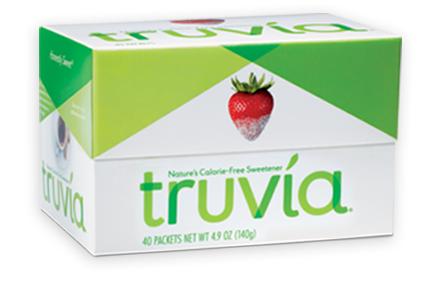 usiness has announced that it has met its 2015 sustainability goals ahead of time.
In 2010, the Truvia business made a number of sustainability pledges. Commitments include:
* To reduce its carbon footprint by 50% in 2015 from a 2010 baseline to become carbon neutral in 2020
* To ensure all processed water is returned to the same quality in which it was taken and reduce net depletion by 25% by 2020
* To reduce waste by 50% across the supply chain in 2015 in an effort to become zero waste by 2020.
Truvia sweetener has already met its 2015 targets in carbon emissions and waste, and has made some progress to meet its 2020 end goals. For water reduction, the Truvia brand has already exceeded its 2020 goals.
Truvia said that the reductions made are a consequence of the brand's continued work to measure, manage and reduce its carbon emissions, as part of the business's broader commitment to reducing its environmental impact.
These achievements are being announced alongside the Carbon Trust's independent recertification of Truvia calorie-free sweetener products and its stevia leaf extract carbon footprints. The recertification is said to have shown that the Truvia business has reduced its carbon emissions of its Truvia stevia leaf extract supply chain by 45% since 2011.
The reduction in carbon emissions was primarily the result of improvements in yield and the transition to a new processor that uses renewable energy.
"The recertification is an important milestone for the Truvia brand as part of meeting our ambitious sustainability goals,” said Peter Dahm, director of sustainability for the Truvia brand. “Reducing our carbon footprint isn't a single project with a finite end-date. We continually strive for environmental excellence."
"We are delighted to continue working with the Truvia brand to help understand and reduce the environmental impact of Truvia sweetener products,” said Darran Messem, managing director of certification at the Carbon Trust. “Since the original certification, of Truvia the business has made marked improvements to its products' carbon footprint. This is an important part of being a sustainable business, and it is good to see this is being done in combination with a commitment to reducing other environmental impacts, such as water use and waste."
The Carbon Trust has certified reductions in the total greenhouse gas emissions for various different sizes of Truvia calorie-free sweetener sachets and Truvia spoonable, as sold in the EU and USA. The certification takes into account emissions at every stage of the supply chain, including cultivation, processing, packaging, transport and use and disposal.