SaltLite will reduce sodium content of cheese by 50%
Salt is an essential ingredient in cooking, food preservation as well as the manufacture of processe…
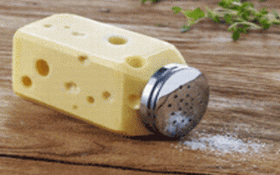 Salt is an essential ingredient in cooking, food preservation as well as the manufacture of processed food. However, due to the link between excessive sodium consumption and high blood pressure, the World Health Organization (WHO) dietary guidelines recommend consuming less than 2,000 mg sodium, or 5 grams of salt, per day.
Average sodium consumption in countries around the world ranges from 2,600 to 7,200 mg per person per day, requiring a 25-75% reduction to meet WHO recommendations. Most western countries and regions including the US, Canada and the EU have voluntary initiatives to reduce dietary sodium intake, including salt reduction in cheese.
Cracking the code of taste, texture and shelf life
“Reducing sodium in cheese is technically challenging as it has adverse impact on taste, texture and shelf life,” explains Timothy Wallace, Enzymes Marketing Manager, Chr. Hansen. “Commercial attempts to reduce salt in cheese have been largely unsuccessful due to poor product quality. Although consumers desire healthier foods, most are unwilling to trade quality for health.”
SaltLite™ - a natural solution to sodium reduction
“Using SaltLite™, cheese producers are able to reduce sodium levels up to 50% while ensuring exceptional product quality. Moreover, SaltLite™ contains only natural ingredients already used in the manufacture of cheese. We are proud to make this breakthrough innovation available to the global cheese industry,” concludes Timothy Wallace.
Improving food and health
SaltLite™ is the result of Kirsten Kastberg Moeller's PhD project carried out in collaboration between Chr. Hansen and the University of Copenhagen, Denmark. In her PhD work, Kastberg Moeller explored the potential of adapting the existing cheese-making technology, by modifying process parameters and extending functionalities of added lactic acid bacteria and coagulant, to improve the flavor and texture of cheddar cheese with a 50% reduced sodium level. "It is truly rewarding to have contributed to the development of such an important innovation, which supports Chr. Hansen's corporate vision of "Improving food & health" so well", Kastberg Moeller reflects. She is currently working as Development Scientist in Chr. Hansen's Cultures & Enzymes R&D department.