Mixed fortunes for U.K. seafood processing industry
In 2011 the number of fishermen employed in the Scottish fleet dropped below 5,000 for the first tim…In 2011 the number of fishermen employed in the Scottish fleet dropped below 5,000 for the first time, reflecting reductions in landings and the difficulty of operating profitably in the current economic climate. In any assessment of the strategic importance of the U.K. fishing and aquaculture industry, consideration must be given to the number of additional downstream jobs that are provided by the seafood processing sector, as the number of these jobs exceeds those in the catching and farming side of the seafood industry. However, it now looks as though these jobs are also under threat from lower landings, outsourcing of primary processing, increased consolidation and automation.
A recent survey of the U.K. seafood processing industry carried out by Seafish, the U.K. authority on seafood, showed a decline in the number of processors compared with the previous survey in 2010, and mixed fortunes for different sectors.
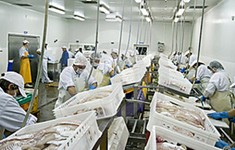
The survey confirmed that seafood processing in the U.K. remains highly concentrated in two areas — Grampian in the northeast of Scotland and Humberside in the northeast of England. The report also showed that since 2010, the number of whitefish, pelagic fish, shellfish and exotic fish processing units has fallen by 15 percent from 384 to 325, while the number of full time equivalent (FTE) jobs have declined from 14,331 to 11,864, a reduction of 17 percent.
These figures are in sharp contrast to the shape of the industry in 2004, when there were 573 processing units employing 18,180 people, and are a reflection of an ongoing decline. This was further highlighted last week by the reported closure of one of Aberdeen's oldest fish processing companies, Andrew Christie Junior Ltd.
While the processing industry continues to include a small number of large multi-unit businesses, and a large number of small, single-unit businesses, it is these latter units that have experienced the greatest decline in numbers over the past two years. Companies with between 1 and 10 FTE employees have reduced by 22 percent since 2010 and by 53 percent since 2004, showing them to be the least resistant to the effects of a downturn in the economic climate.
Primary and mixed processing units continue to be the most prevalent type of business, but there has been a decrease of 25 percent in the number of primary processing units since 2010.
The survey also looked at the age of businesses and found that there had been far fewer start-up companies in recent times and that more job losses had occurred in younger companies compared with longer established companies.
A separate survey by the Scottish Seafood Association found that irregular supplies were a major factor affecting the financial performance of more than three quarters of the seafood processors interviewed. Other significant concerns for processors include rising fuel and energy costs, along with the increasing costs of transportation, while price resistance by customers and late payments have affected at least half of them.
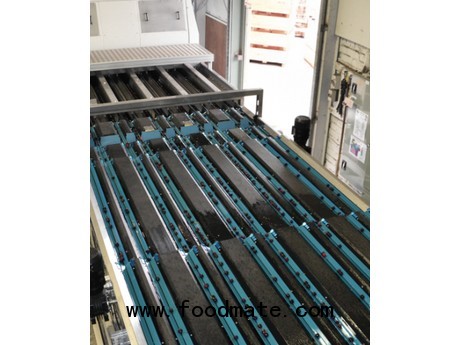
Slightly better news came from the salmon processing sector, which lost just one factory in 2012 compared to 2010. However the remaining 53 units contrasts starkly with the 71 processors that were in operation in 2008. Despite the drop of just one unit, the number of FTE jobs fell by 18 percent to 3465 in 2012, possibly as a result of increased automation in processing plants.
The majority of salmon processors are located in Scotland, which is also home to 99 percent of the U.K.’s salmon farms. However, some processors also import farmed salmon from Norway and the Faeroes, as well as wild salmon from Alaska and Russia.