Australian consumer group goes after serving size standards
A prominent consumer rights group in Australia has slammed the country’s food manufacturing industry…A prominent consumer rights group in Australia has slammed the country’s food manufacturing industry over labelling it claims is misleading and contributory to rising obesity rates.
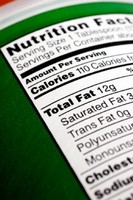
In a statement, Choice branded the current regulations, which allow manufacturers to determine serving sizes, “flawed” and “unrealistic”.
The group pointed towards recent findings by the Australian Institute of Health and Welfare, which revealed that 23% of children and 61% of adults in the country are overweight or obese. It said that such conditions are a result of increasing energy intakes, to which the flawed serving-size standards are the main contributing factor.
Inconsistent servings an issue
Choice alleged that serving sizes are often inconsistent between comparable products, and even within the same brands, and some are simply unrealistic.
“Manufacturers and the food industry recommend serving sizes for the food on the nutrition information panel], and these are used to determine the percentage daily intake figures for kilojoules and other nutrients,” it said.
“In theory you should be able to use these serving recommendations to control how much you’re eating. But with large packets that contain multiple servings, following the recommended serving sizes isn’t necessarily as sensible."
To illustrate this, Choice said that a 300ml bottle of Golden Circle Healthy Life Probiotic juice contained 1.5 servings, while a 225g tub of Bulla Yoghurt Crunch contained 2.25 servings.
The group instead recommended that serving sizes decided by manufacturers shouldn’t form the basis of a front-of-pack labelling system; instead, a more interpretive system was required.
Clearer information
Such a system could translate the numerical information already available in the nutrition information panel into colours, symbols, words or ratings.
“Based on consistent measures of products, such as 100g or 100ml, this system will help consumers compare products at a glance and identify the healthier options more easily,” said Choice.
Last year, Australian authorities decided to introduce front¬-of¬-the¬-pack labelling with easy-to-understand nutritional information over the next year.