Cold atmospheric plasma potential yet to be fully unlocked for detecting Salmonella
Researchers have found cold atmospheric plasmas (CAP) can tackle Salmonella but the bacteria can ‘hi…Researchers have found cold atmospheric plasmas (CAP) can tackle Salmonella but the bacteria can ‘hide’ in the bumps of strawberries and the pores in lettuce leaves.
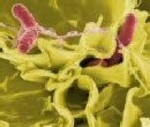
The team from the Institute of Food Research (IFR) investigated the technique of cold atmospheric plasma technology to ensure fresh produce is free of bacterial contamination.
In the journal Food Microbiology, Dr Arthur Thompson found Salmonella could be effectively inactivated by plasmas, but variables, such as the ambient temperature of the produce or the growth phase of the Salmonella had no significant effect.
Thompson et al found Salmonella could ‘hide’ from the effects of the plasmas in the bumps on strawberries, the pores in lettuce leaves or the cell walls of potatoes as they create shadowed zones that block plasma reaching bacteria.
Plasmas are a mix of highly energetic particles created when gases are excited by an energy source.
They can effectively inactivate microorganisms, and as they don't involve extreme conditions such as high temperature they have been suggested for use in decontaminating food surfaces without affecting the structure.
Current methods
Replacing current methods of chlorine-based decontamination is currently a focus due to stricter regulations and CAP is one of the ways being looked at to ensure fresh fruit and vegetables are free from bacterial contamination without reducing quality or flavour.
Dr Thompson told FoodQualityNews.com the study used a laboratory scale plasma device to investigate the parameters on how effective CAP could be.
“There has been an increase in fresh produce consumption and there is a need to ensure the food we eat is safe.”
He added the method could be applied to listeria and E.coli and other foods.
“We applied it to fresh produce because it is delicate and so normal treatments risk affecting the food.”
Reasons unclear
However, he admitted it was still unclear how the CAP treatment led to bacterial inactivation.
“There are a number of suggested means, disrupting the Salmonella membranes is one suggestion but the process is not entirely understood.
“More research is needed to determine which foodstuffs it can be used on and more understanding of the plasma resistance and the sensory properties of cold plasma products and if it affects the produce quality and shelf life.”
When asked about the Salmonella hiding in in microscopic surface structures of some foods, he said: “More high powered exposure might get at it, but we have to be careful not to affect the produce, or we could combine treatments.
“We could increase the power, the exposure times or combine methods with low concentrations of other methods such as chlorine-based products which are now strictly regulated, so we could use a lower concentration of those products combined with CAP.