Dust-Up Over Arsenic Levels In Rice Settles Nothing
Consumer Reports and National Chicken Council exchanged some shots, but the U.S. Food and Drug Admin…Consumer Reports and National Chicken Council exchanged some shots, but the U.S. Food and Drug Administration (FDA) did not change so much as a comma in any of its recommendations about arsenic and rice.
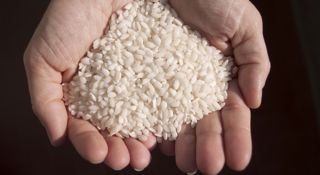
FDA says "there is an absence of the necessary scientific data that shows a causal relationship between those who consume higher levels of rice and rice products and the type of illnesses usually associated with arsenic."
Check back at the end of the year, says FDA. The agency is still studying the issue.
Arsenic is a chemical element that occurs naturally in the environment and from human sources. One of the world's oldest poisons, arsenic can find is way into foods like rice grown at ground level in water.
Yet, FDA does not dictate how much arsenic is permitted in rice or any other food.
FDA and CU are out with competing studies into arsenic in rice. CU's 223 samples found arsenic levels up to 8.7 micrograms in rice. CU pointed to New Jersey's drinking water standard with a maximum of 5 micrograms of arsenic permitted in the Garden State's water.
Meanwhile, FDA said 200 of 1,200 samples it has going have returned showing rice with levels of 3.5 to 6.7 micrograms of inorganic arsenic per serving.
For its part, CU said it was not trying to alarm parents or people in general about eating rice, but just wants to raise awareness of the issue surrounding rice diets since arsenic is a proven carcinogen. CU also found higher levels of arsenic in brown rice than in white.
Rice from the southern U.S. also had higher levels than rice from California or Asia, according to the CU samples.
CU, which also rolled out Illinois Attorney General Lisa Madigan as a spokesman, did not really explain why a drinking water standard should be applied to rice. Much of the rice debate echoed the back-and-forth over naturally occurring arsenic in apple juice, which also remains under FDA review.
As for the dust-up between CU and the National Chicken Council, maybe it's just a big misunderstanding.
"Consumers may be surprised to learn that similar to antibiotics, arsenic-containing drugs can be fed daily to chickens, turkeys, and pigs to promote growth, lower the levels of feed required," said CU's Urvashi Rangan.
Not so, said the Chicken Council's Tom Super. He said a feed containing Roxarsone that contained safe levels of organic arsenic, was removed from the market last year.
"No other products containing any amount of arsenic are used in chicken production," Super said.
FDA plans to continue with 1,000 additional samples and the analysis with a "full risk assessment" later this year. Any change in FDA's position on standards for apple juice and rice will likely come at that time.