Officials Tracking Outbreak of Rare Salmonella Strain in Seven EU States
European Union health officials are investigating an ongoing outbreak of Salmonella Stanley that has…European Union health officials are investigating an ongoing outbreak of Salmonella Stanley that has sickened over 400 people in seven member countries. While S. Stanley infections are rare outside of Southeast Asia and usually appear only among those who have traveled there, this outbreak is thought to have originated in poultry - probably turkey - produced in Europe, according to a new joint report from EU health authorities.
The first cases associated with this outbreak occurred in Hungary in August of 2011, but the outbreak was not detected until late June 2012, when health officials were alerted to the fact that an unusually high number of S. Stanley infections had been reported in Belgium. Since that time, Austria, Czech Republic, Germany, Hungary, Slovak Republic and the United Kingdom have all reported cases of S. Stanley with a DNA fingerprint indistinguishable from the strain being tracked in Belgium.
In most affected countries, the outbreak is thought to have begun in January of 2012, when a spike in S. Stanley infections was noted. The most recent case was reported on September 18.
To date, 167 cases have been confirmed as part of the outbreak and a further 254 cases are considered probable. The highest rate of illnesses has been in children under the age of five.
According to the outbreak report - issued by the European Food Safety Authority and Centre for Disease Prevention and Control Friday - cases of the same strain of S. Stanley are still being reported and the outbreak is considered ongoing.
"As control measures have not yet been implemented to remove the source of infection and potential food vehicles from the market, it is likely that additional human cases of S. Stanley infections will be reported in EU Member States," says the report.
Turkey Suspected as Source
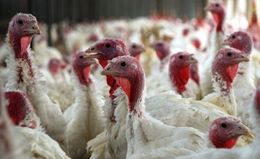
While officials do not know the exact source of the bacteria, they suspect that it came from somewhere in the European turkey production chain. The outbreak strain has been found among turkey flocks and in turkey meat in eight EU member countries, including six where outbreak-related illnesses have occurred.
In Austria, the outbreak strain was isolated in samples from turkey fattening farms, a turkey hatchery and from a turkey parent flock that originated in Hungary. Germany isolated the outbreak strain in two samples from turkey farms and four samples from turkey meat. In Hungary, the outbreak strain was discovered in three isolates from turkey breeding flocks, 15 isolates from fattening flocks, one from turkey meat and one from turkey neck skin. Belgium reported the outbreak strain in one sample of turkey meat, and Czech Republic found an indistinguishable strain in fattening turkey flocks. Poland isolated the outbreak bacteria in one sample from a turkey and three from turkey meat, while Finland and the UK each reported positive samples from turkey meat.
However, some isolates of S. Stanley with a DNA fingerprint indistinguishable from the outbreak strain have also been found in samples from beef, chicken flocks, minced pork and beef, and even dogs, cats, peppermint and seagull, leading investigators to conclude that "contribution of other food and animal sources, such as beef, pork and broiler meat to the outbreak cannot be ruled out."
Travel to Southeast Asia, however, has been ruled out as a source of the bacteria, since no victims have reported visiting that region prior to illness.
The Outbreak Strain
Salmonella Stanley infections are extremely rare in areas outside of Southeast Asia. A total of eight outbreaks were reported in other regions between 1995 and 2011, according to the report. Between 2006 and 2012, 2,995 cases of S. Stanley were reported in Europe. Among the 2,309 of these cases for which travel history was known, 75 percent were determined to be travel-related.
In the U.S., one case of S. Stanley indistinguishable from the outbreak strain has been detected. The patient, a male, fell in on July 23, 2012, but did not report traveling outside the U.S. in the week before he fell ill.
All isolates of the bacteria found in the EU the turkey production chain have been shown to be resistant to nalidixic acid, an antibiotic used to treat severe Salmonella infections, among other bacterial infections.
Recommended Precautions
EFSA and ECDC urge all food handlers at EU establishments to follow safety standards closely, taking special care to wash hands and avoid contact between raw turkey meat and other foods.
The agencies also ask that all Member States perform Pulsed Field Gel Electrophresis (PFGE) analysis on all S. Stanley isolates from 2011 and 2012 and report findings to ECDC at fwd@ecdc.europa.eu.