Tomatoes prevent strokes, researchers say
Growing up, your mother implored you to "eat your fruits and vegetables." You likely grew up with th…G
 rowing up, your mother implored you to "eat your fruits and vegetables." You likely grew up with those same values because the both of you always know that fruits and vegetables are good for you.
Through better, more comprehensive research, we are beginning to learn more and more about just how good they are for us.
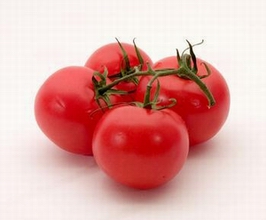
Take the most recent research involving the health benefits of tomatoes. New information shows that a tomato-rich diet can dramatically reduce your risk of having a stroke, scientists in Finland have found.
According to the BBC, the Finnish researchers were looking into the impact of lycopene - a bright red chemical element that occurs naturally in tomatoes, watermelons and peppers. In a study involving 1,031 high-risk men, those with the most lycopene in their bloodstream were the least likely to have a stroke, the scientists - who published their findings in the journal Neurology, said.
A tomato a day - or several tomatoes
The National Stroke Association says that stoke kills twice as many women a year as breast cancer. But other research indicates that men are more likely to die from a stroke or develop a serious complication from stroke than women.
Following the Finnish study, the BBC said, Britain's Stroke Association called for more research into the findings.
"We all know that eating plenty of fresh fruit and veg is good for our health. This study suggests that an antioxidant which is found in foods such as tomatoes, red peppers and water melons could help to lower our stroke risk," said Dr. Clare Walton, the group's research communication director.
"However, this research should not deter people from eating other types of fruit and vegetables as they all have health benefits and remain an important part of a staple diet. More research is needed to help us understand why the particular antioxidant found in vegetables such as tomatoes could help keep our stroke risk down," Walton added.
Research methods and methodology
Researchers came to their conclusions after tracking the study's participants' blood levels of lycopene, which were measured at the beginning of the study and tracked over the next 12 years.
Participants were split into four groups based on blood lycopene levels. 25 of 258 men in the low-lycopene group suffered strokes compared to 11 of 259 men in the group with high levels of lycopene.
Researchers concluded that the risk of stroke was cut by 55 percent with a diet rich in lycopene.
"This study adds to the evidence that a diet high in fruits and vegetables is associated with a lower risk of stroke," said Dr. Jouni Karppi, PhD, of the University of Eastern Finland in Kuopio, the lead author.
"The results support the recommendation that people get more than five servings of fruits and vegetables a day, which would likely lead to a major reduction in the number of strokes worldwide, according to previous research," he said.
In addition, researchers also examined the blood levels of the antioxidants alpha-carotene, beta-carotene, alpha-tocopherol and retinol, "but found no association between the blood levels and risk of stroke," the Daily Telegraph reported.
Earlier research found that a nutrient present in cooked tomatoes has been shown to slow, and even kill, prostate cancer cells in the lab. That study, too, linked lycopene to the better outcomes.
"This simple chemical reaction was shown to occur at lycopene concentrations that can easily be achieved by eating processed tomatoes," said Dr. Mridula Chopra of the University of Portsmouth, the study's lead scientist, who went on to stress that the results were preliminary.