Industry fights EU's ban on the term 'probiotic'
The probiotics industry in Europe has launched scientific and legal bids to counter an EU-wide ban o…The probiotics industry in Europe has launched scientific and legal bids to counter an EU-wide ban on using the word 'probiotic' on packaging and marketing materials.
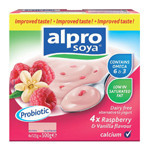
The ban comes into force on December 14 as part of the Nutrition and Health Claims Regulation, which only permits firms to make claims from an approved list. No probiotics claims have been approved and, because the European Commission decided in 2007 that the term 'probiotic' carries an implied health claim, manufacturers can't even mention it whether or not they explicitly claim an associated health benefit.
"It's a horrible situation," said Carine Lambert, secretary general of the Yogurt and Live Fermented Milks Association (YLFA). She argued that was bad for consumers, as well as industry. "What if someone didn't want to eat probiotics? We now have no way to tell them they're in a product."
Fighting back
The industry is fighting back.
Individual firms are working to make strain-specific submissions that would enable claims relating to named bacterial strains.
But firms say they're already backed by strong science, and problems so far stem from a lack of clarity in the approvals process, not a lack of evidence. "Danone believes that changes to the EFSA [European Food Safety Authority] process are a prerequisite to gain a clear understanding of the scientific requirements needed to obtain approval," said a spokesman for the probiotic yogurt manufacturer.
In addition, the Global Alliance for Probiotics (GAP) which includes manufacturers and ingredients firms wants to submit claims that link health benefits with "clusters" of similar bacteria.
'Rigorous scientific approach'
"GAP is applying a rigorous scientific approach using independent clinicians, scientists, and experts in systematic reviews to identify where defined clusters of probiotic organisms result in similar physiological benefits," GAP told Food Manufacture. "So far, we have seen some surprisingly robust results that have startled even the experienced systematic reviewers.
"We are hoping that an improving dialogue with EFSA on specific questions arising from this type of dossier will help guide GAP in preparing a high-quality dossier for the NDA panel [EFSA panel on Dietetic Products, Nutrition and Allergies] to assess in 2013."
Meanwhile, YFLA is leading the search for a legal remedy by seeking to get 'probiotic' reclassified as a 'generic descriptor'. This informs consumers about what's in a product and would enable firms to use the term 'probiotic' without making specific health claims.